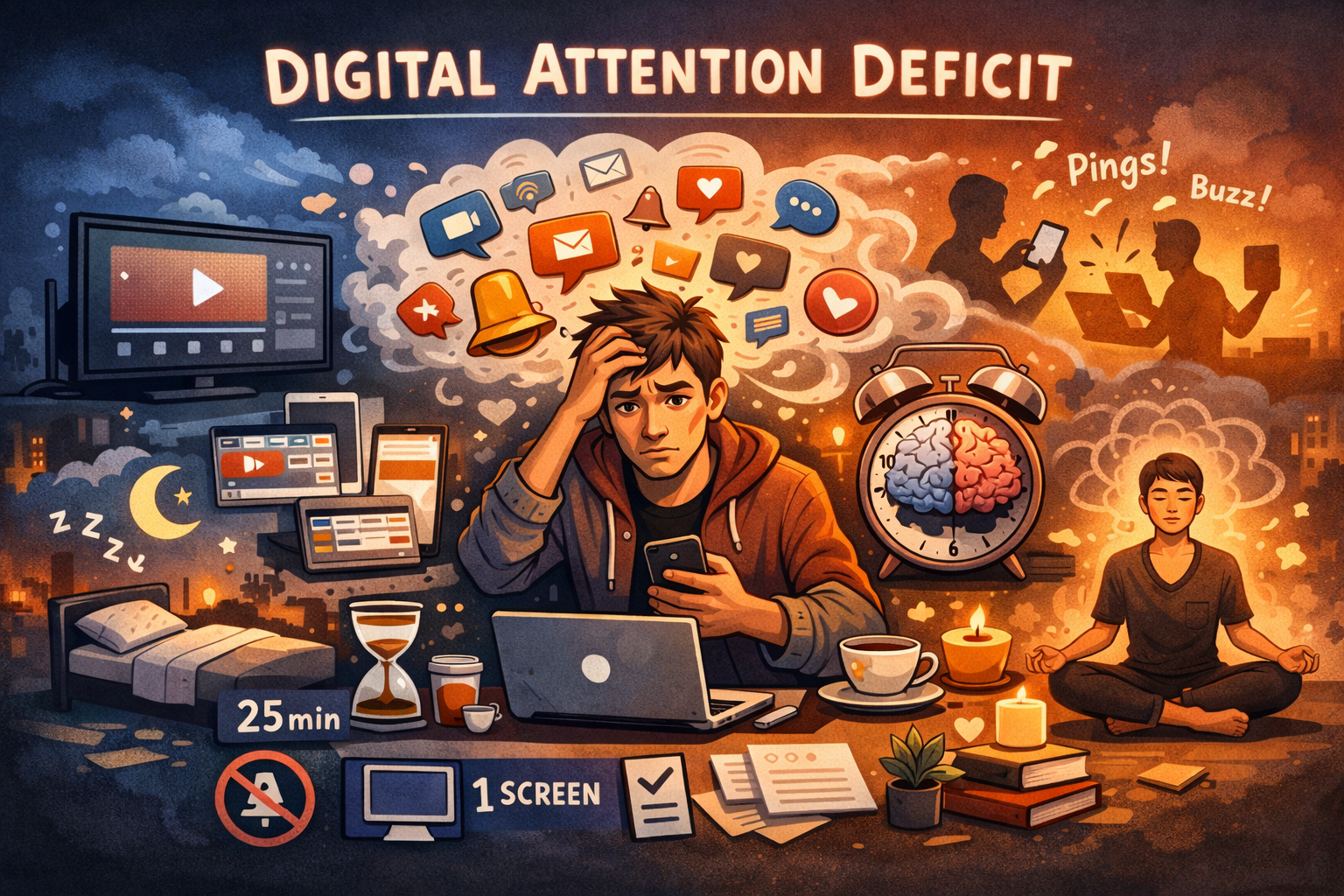
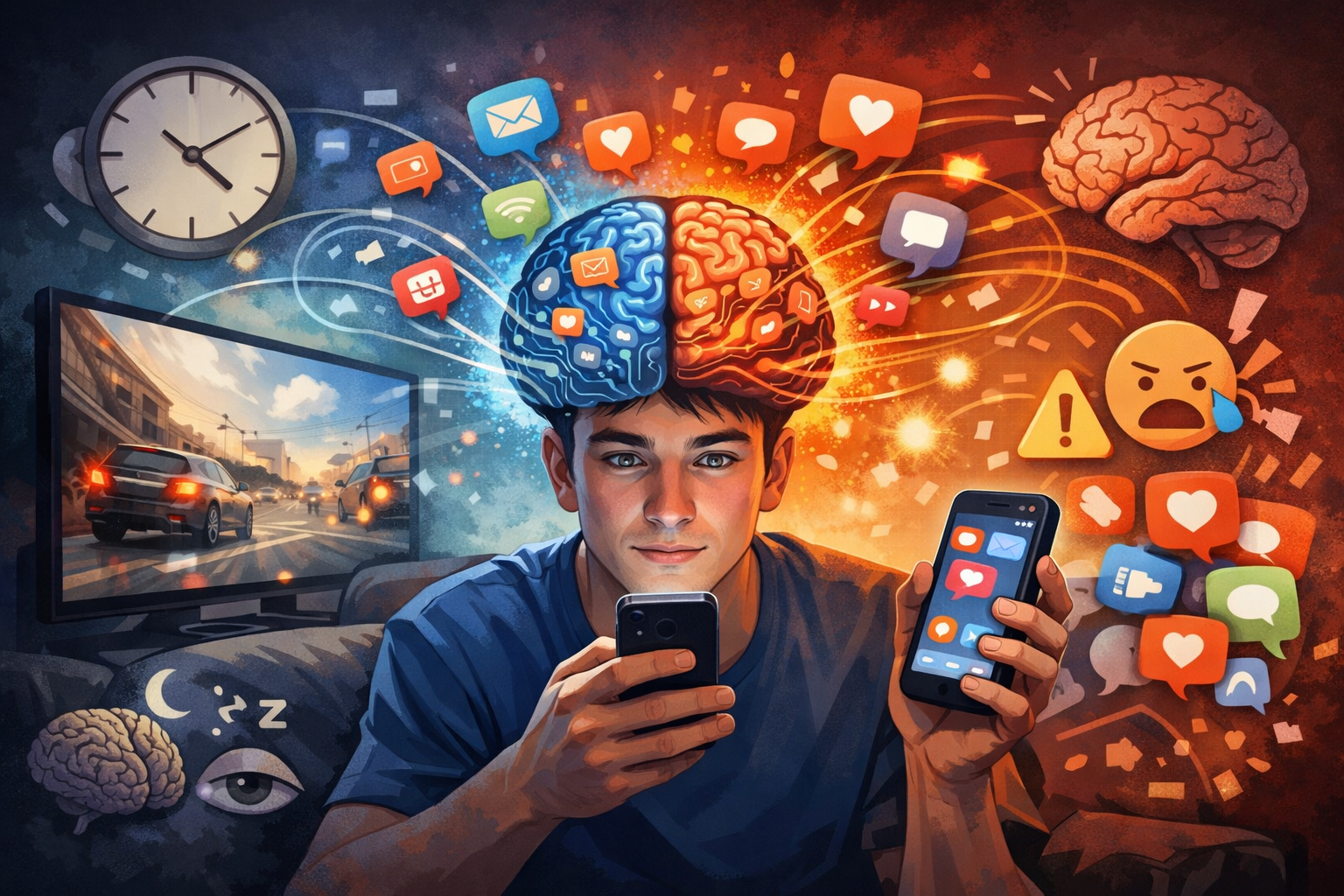
Whenever we attempt to relax by watching a show, sporting event, or seeing news, our attention often shifts to mobile devices without conscious intent. Even many of us, continue to scroll mobiles while watching TV or seeing movie or YouTube videos on computer. Or we respond to messages while listening. Therefore, we divide focus among multiple sources. As a result, substantial content is consumed, yet we may feel unexpectedly empty and unfocused.
This behaviour, referred to as the second-screen habit, has become highly prevalent. Research published in 2025 indicates that 83% of Americans use an additional device, such as a phone or tablet, while watching television. Globally, the average internet user spends approximately 6 hours and 40 minutes online each day (DataReportal – Global Digital Insights).
In the hyper-connected world, attention has become a defining concept of the “second screen. The term 'second screen' describes the use of one device while another is already in use, such as a phone alongside a television, a phone with a laptop, or a laptop during a meeting. This behaviour often begins as a brief check but can quickly develop into a repetitive cycle of watching and scrolling.
Individuals may engage in this habit because it appears soothing, social, or productive. However, the brain does not interpret it as calming; instead, it processes the activity as continuous task-switching.
Attention incurs a switching cost.
Although we often refer to this behaviour as multitasking, in reality, we are typically switching between tasks rather than performing them simultaneously. The American Psychological Association reports that even brief mental blocks resulting from task switching can significantly reduce productive time, emphasising the cumulative impact of these switching costs (American Psychological Association).
Interruptions do not only consume time; they also diminish cognitive depth. Research on digital distraction from UC Irvine links interruptions with extended return times, indicating that regaining focus can be a lengthy process. Therefore, engaging in second-screen behaviour not only divides attention but also repeatedly forces the brain to reset its focus.
Manifestations in daily life
- We start a task and forget why we opened the phone.
- We read the same line twice and still miss the meaning.
- We feel busy, yet oddly behind.
- We crave more stimulation even when we are tired.
Our memory and learning get thinner.
Second screening increases cognitive load, which reduces the amount of information we actually absorb. A study on second-screen viewing found that it leads to lower news recall and comprehension, with cognitive load mediating the effect (ScienceDirect). In summary, divided attention reduces retention.
A well-known study in PNAS found that heavy media multitaskers are more susceptible to interference from irrelevant stimuli and performed worse on a task-switching measure, likely because filtering distractions becomes more difficult. Stanford’s summary highlighted this finding: “They’re suckers for irrelevancy… Everything distracts them.”
This does not indicate a fundamental flaw; rather, it suggests that attention adapts to the patterns that are consistently reinforced.
One notable finding in this area is that a phone does not need to be active to draw on mental resources. A 2017 study titled Brain Drain reported that the mere presence of a personal smartphone can reduce available cognitive capacity, even when individuals successfully resist checking it.
This phenomenon may explain why individuals often experience mental fatigue at work or restlessness during conversations, even when their phone is placed face down on the table.
Stress levels increase when attention is constantly divided.
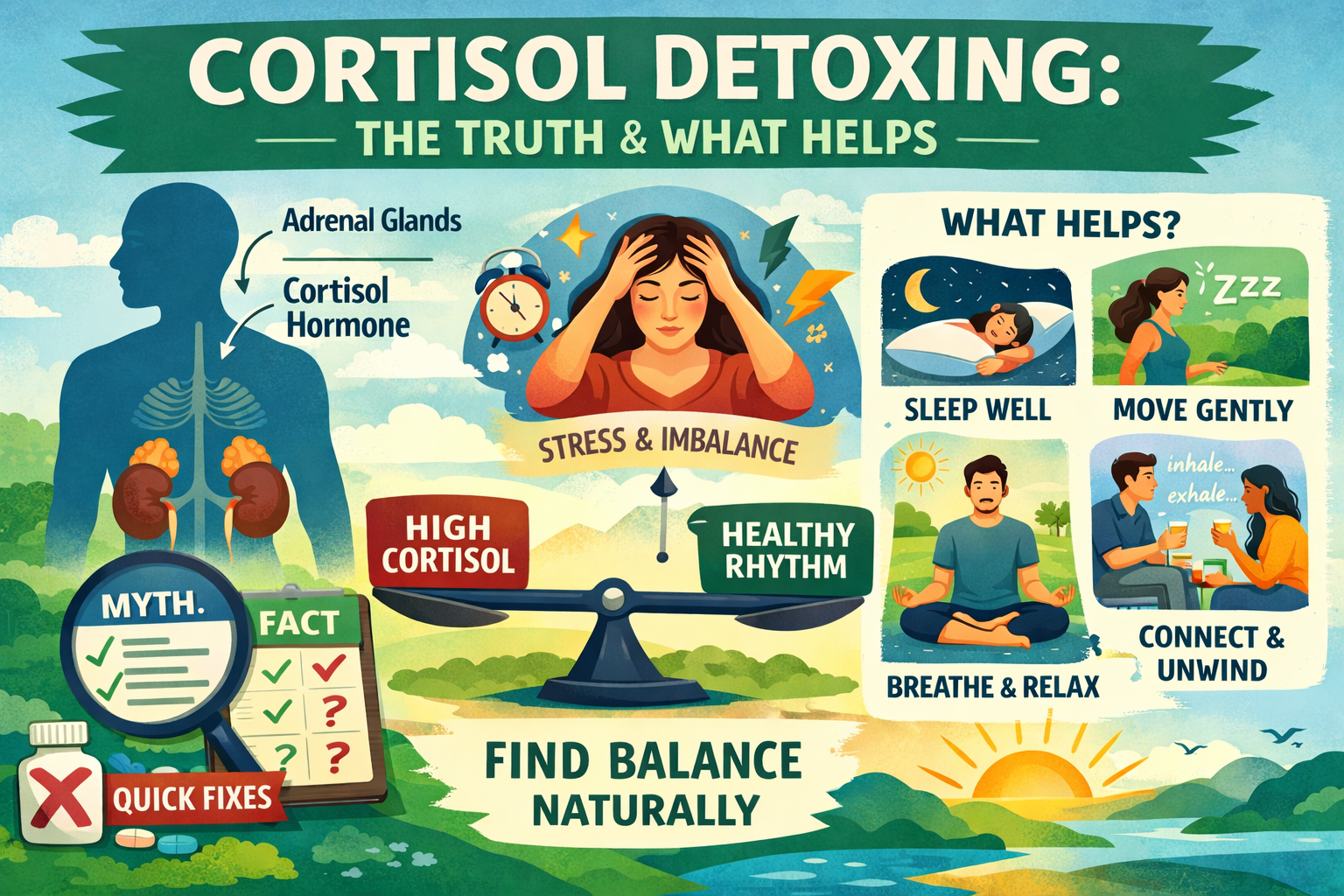
Beyond its effects on focus and memory, second screening can also increase stress. The American Psychological Association notes that research shows multitasking is linked with stress responses, and psychologists discussing attention and modern work describe how constant switching leaves individuals mentally overloaded (American Psychological Association).
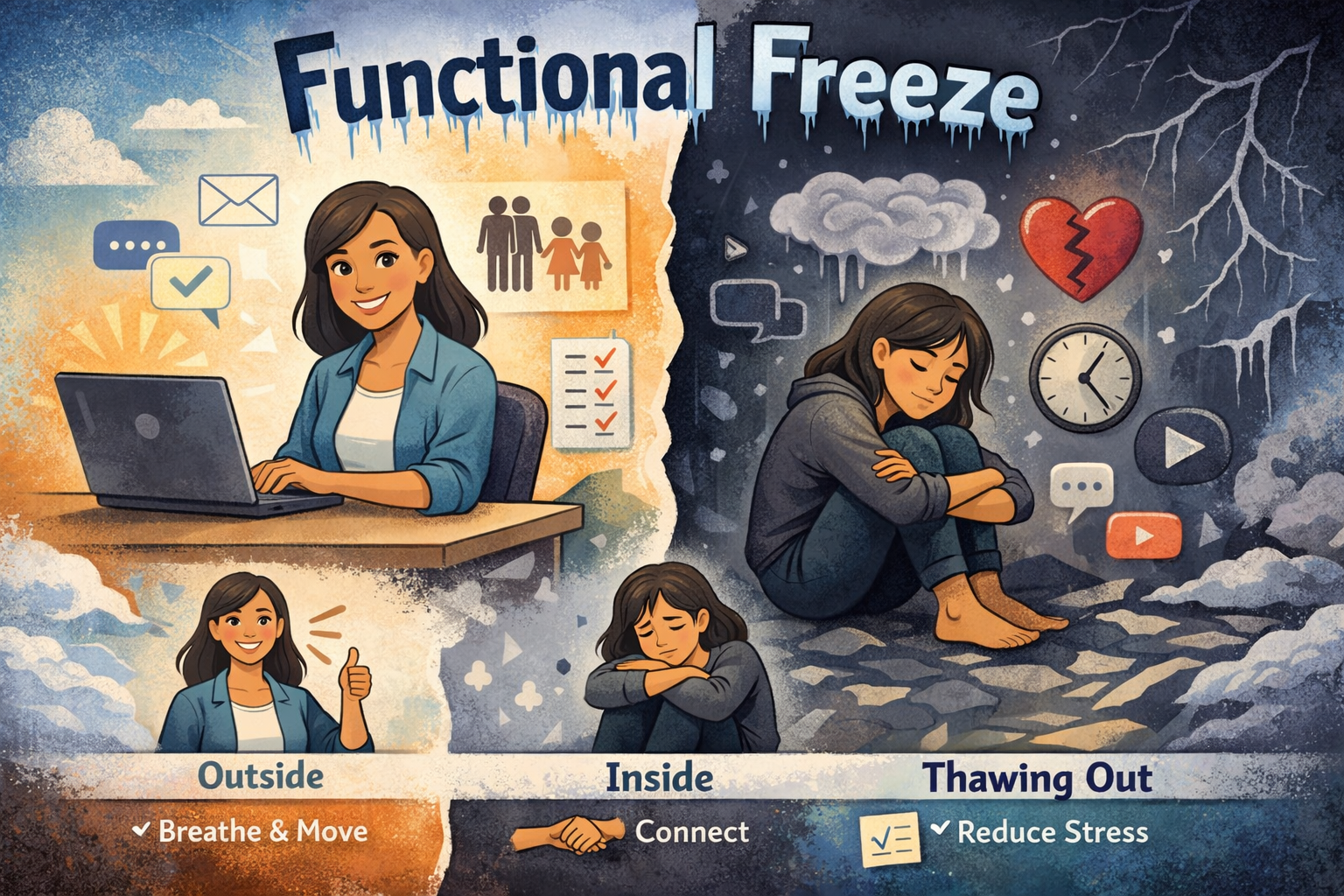
Although the second screen may be perceived as a break, it can impose an additional demand on the nervous system.
How can we protect our strategies for maintaining focus in a two-screen environment?
When watching content, we should focus solely on that activity. When scrolling, we should do so with full attention. Adhering to this guideline reduces task switching. We completely choose that. This single rule reduces switching.
Establish designated phone parking zones.
Physical distance from the phone is important, particularly since its mere presence can diminish attention.
Consolidate scrolling into scheduled intervals
Allocating a designated 10-minute period for scrolling, rather than engaging in frequent brief sessions, can help prevent the fragmentation of daily activities.
Reduce notifications to the essentials
Each notification conditions the brain to expect interruptions. Reducing notifications results in fewer disruptions. Engaging in a single task for 25 minutes, followed by a 5-minute break, can help restore confidence in the ability to focus. The brain responds more positively to consistency than to intensity.
Conclusion
Our attention is not just for productivity. Our attention is on how we feel love, meaning, learning, and presence. The second screen habit can train our minds to live in fragments. But the good news is that attention is trainable. When we start choosing one thing at a time, our mind slowly begins to remember how to stay.