Know thyself and the modern distractions.
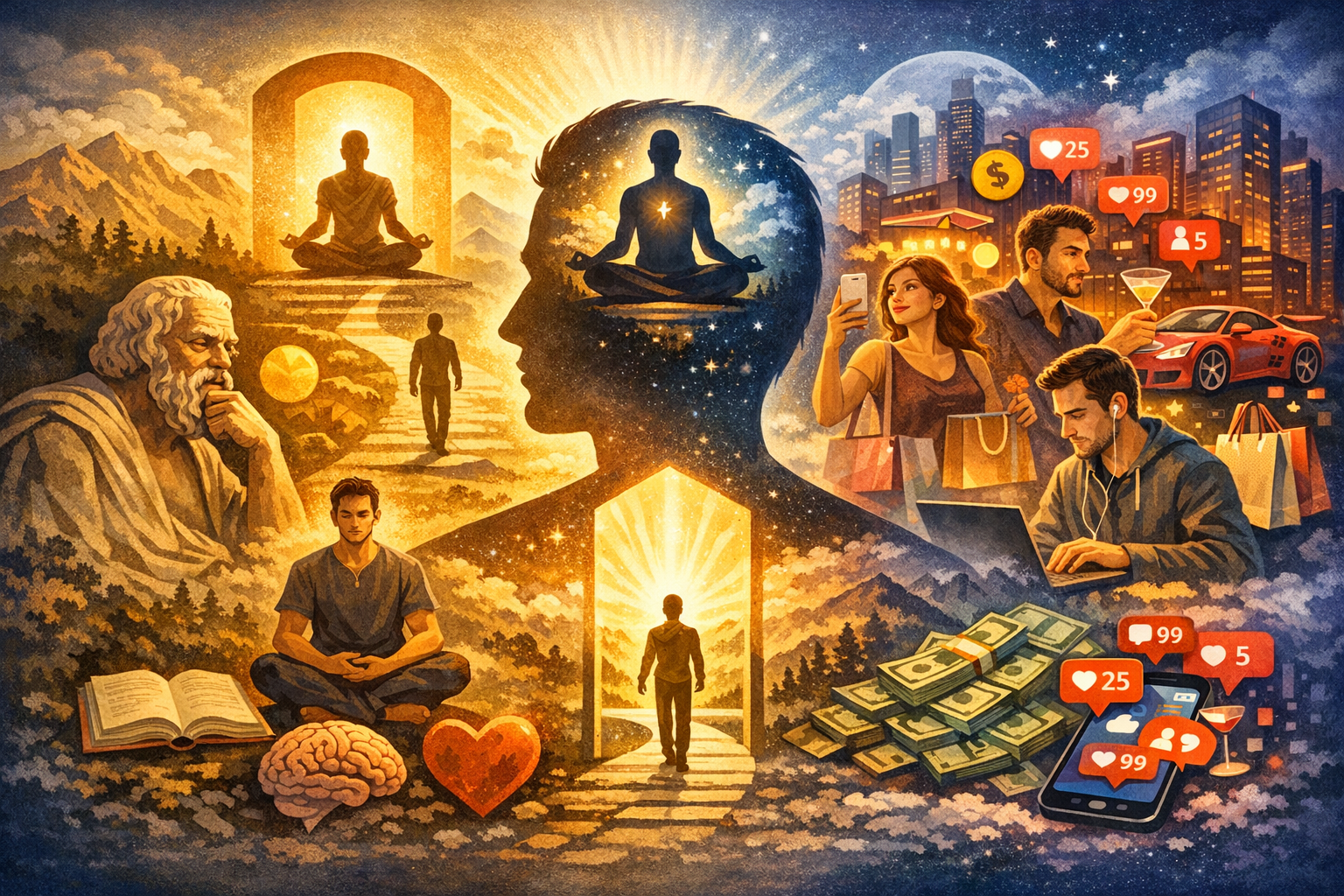
Socrates (470-399 BC), the classical Greek philosopher, famously said, 'Know thyself.' He also believed that a life without self-examination is not worth living. This idea still matters today, especially as our fast-paced lives are filled with glamour and constant social media.
Why do we not look inside anymore
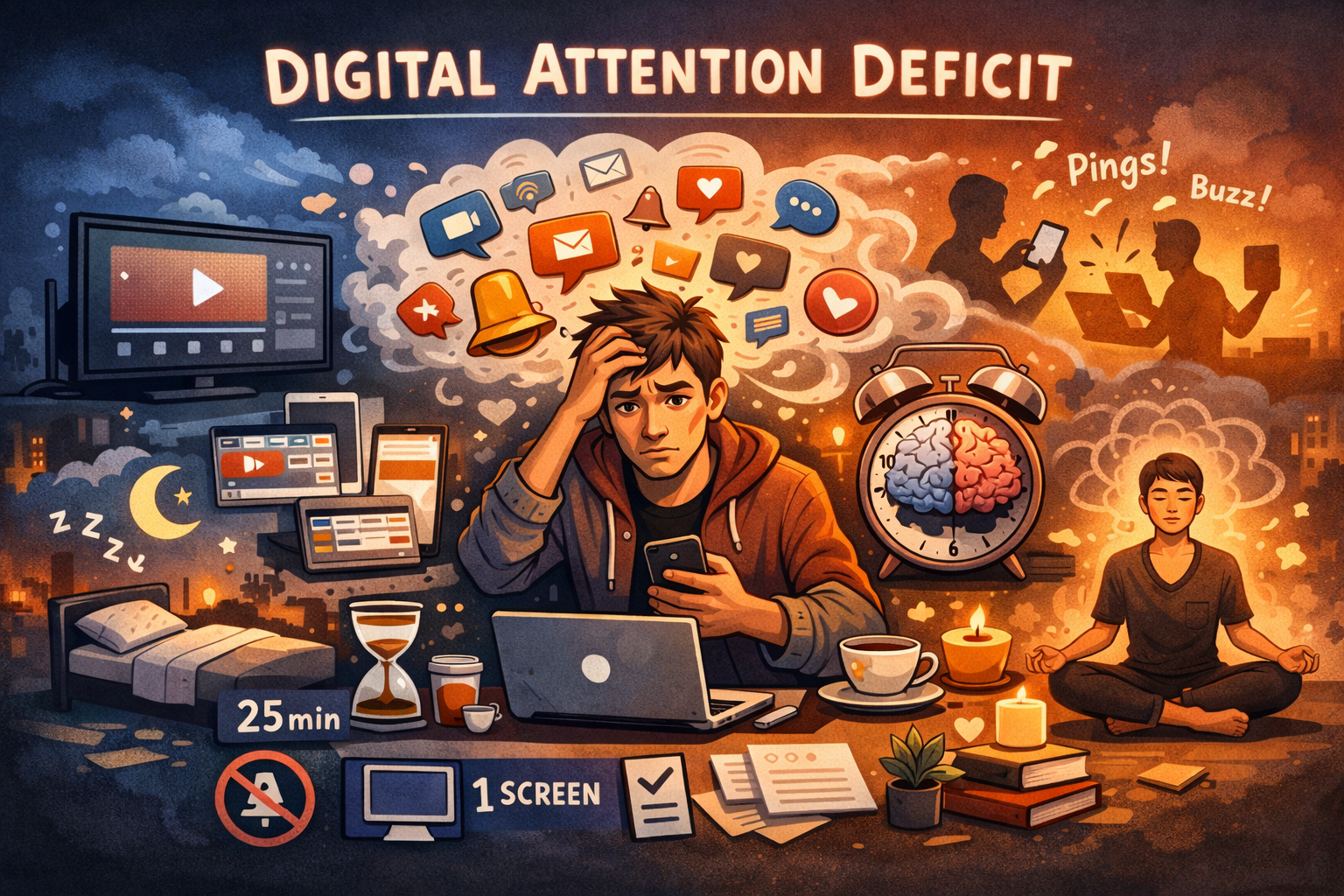
Today, with so much focus on material goods, comfort, glamour, and social media, we rarely take time to look within. We stay busy, whether we follow the same routine every day or try to do something new and creative.
Surviving or accumulating, but staying outward
Some people work hard just to get by, while others focus on building wealth and collecting things to be happier. Either way, they get caught up in their own outside world. If you ask them if they know themselves, they will confidently say yes—but is that really true?
Get to know yourself.
The truth is, most of us do not really know ourselves. Do we recognise the darker parts of who we are? We tend to focus on our good qualities and often think we are better than others. Rarely do we try to look deeper into our inner selves.
The inner workings of the mind are neglected.
We rarely try to understand how our minds work. Most of us do not know much about ourselves. From a young age, we are taught to learn about others and the world, but not about ourselves. Yet self-knowledge matters most in life.
The heavy cost of living in the 'outside world'
Today, material things and social media grab our attention and keep us from looking inward. Without self-reflection, we get lost in outside distractions and miss out on real purpose and satisfaction in life.
Many people claim to know themselves well, but most do not see their own deeper layers. We rarely look past the surface to explore our inner selves or their complexities.
Many lack understanding of their thoughts and emotions, our focus trained outward since childhood, while self-knowledge—the foundation of a meaningful life—remains neglected.
Turning inward: the beginning of inner governance
It is important to stop and focus on ourselves, taking time to really get to know who we are. When we start this journey, we discover both our strengths and weaknesses. This helps us become more self-aware, accept our flaws, and understand ourselves better. By doing this, we can grow, feel better emotionally, and connect more honestly with others. Knowing ourselves can truly change our lives and help us live with more purpose and fulfilment.
The inner world shapes the outer world.
When we know ourselves, we naturally find more happiness, peace, and satisfaction. It becomes easier to handle our thoughts and emotions. Otherwise, managing our own minds is one of life's hardest tasks. The world we see is just a reflection of our inner mind. To manage the world, we must start with ourselves.
Self-inquiry: the first step to self-knowledge
Self-knowledge or 'know yourself' begins with self-inquiry. 'Who am I?' should be the first question that arises within us. With this, there is another associated question: 'What is the purpose and meaning of life.' Once we start deliberating on these questions, many related issues will arise.
The inward journey begins.
When we begin to look for answers, our inward journey begins. We start to see beyond the physical world we experience each day. Most of the time, we think we are our thoughts, not realising there's a difference between 'I' and the thoughts that come and go.
Observing the mind and building self-awareness
If we close our eyes and observe the mind carefully, we find space. If we close our eyes and watch our minds, we notice gaps between our thoughts. The more time we spend observing our minds, the more self-aware we become. As self-awareness grows, it gets easier to manage our minds. We should also pay attention to our feelings and emotions to better understand ourselves. Ramana Maharishi (1879-1950), an Indian Sage and a proponent of Advaita Vedanta, advocated self-inquiry as a path to self-realisation. As we know most of the time, our thoughts revolve around 'I', 'me', and 'my'.
He believed self-inquiry means always paying attention to the feeling of 'I' or 'I am'. This is the best way to see that the 'I' thought isn't real. Ramana taught that as we do this, the 'I' thought fades away, leaving only self-awareness. This leads to a natural sense of being, and over time, the 'I' thoughts become less frequent.
The mind turns inward.
According to Ramana Maharishi, eventually the 'I'-thought no longer arises. Ramana Maharishi said that, in time, the 'I' thought stops coming up, which leads to self-realisation or freedom. The mind can only stop focusing on the outside world by turning inward. With experience, less effort is needed, as the mind is drawn to the peace that comes from focusing on the inner self. The more time we spend inward, the more we realise our true nature and the better we feel. The more we go inward, the happier and more contented we become.
Transform your life's journey through Inner Governance.
We often look for happiness in material things and pleasures, but this usually leaves us feeling less satisfied. We keep trying to get more, hoping it will make us happy, but happiness stays out of reach. That is why we need to look inward to find a happy and satisfying life.
The neglected side of wellbeing: the mind
Today, we put a lot of focus on our bodies, looks, and appearance. People spend time, money, and energy to look better. Physical health and appearance do matter, but in chasing them, we often forget something even more important: our minds and mental health. Mindfulness as mental training.
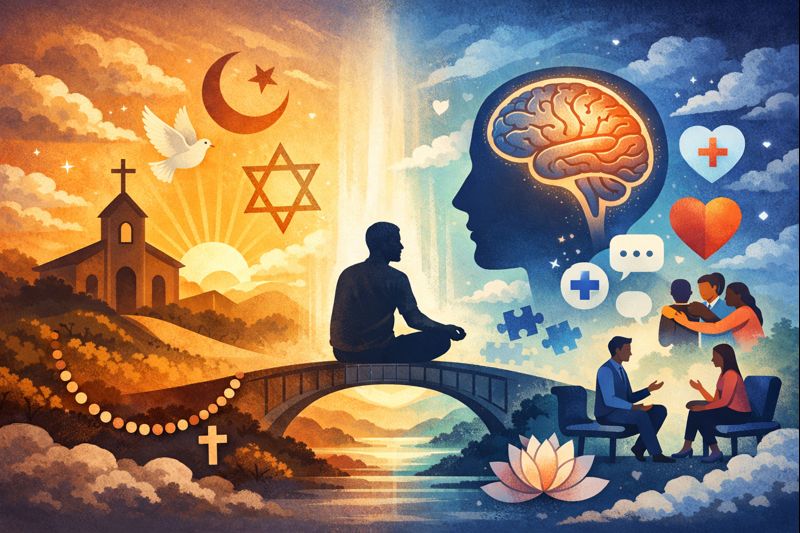
Physical exercise, such as running, going to the gym, or playing sports, can make us stronger. But to strengthen our minds, we need to practice meditation and mindfulness. Many studies have shown that meditation can improve us. Managing stress through meditation can even slow the ageing process. People who meditate often feel happier and more at peace.
Meditation supports resilience and serenity.
Meditation takes us on an inner journey. As we meditate, we watch our thoughts and start to feel calm and quiet. Even during tough times, meditation helps us stay strong. When we are at peace with our minds and can manage our thoughts, we move closer to enlightenment. Meditation also helps us become much more self-aware, which is key to inner control.
Self-awareness: the foundation of inner governance
Self-awareness means paying attention to ourselves and understanding how our actions, thoughts, and feelings affect us and others. We should know ourselves well and be aware of how others see us. It is about noticing how we act in different situations and what we think and feel at any moment. If we are self-aware, we understand all these things about ourselves.
The uncomfortable truth
We often feel sure that we know ourselves well, but that is not really true. We rarely pay attention to our inner world. It's surprising how little we actually know about ourselves.
A deeper inner journey creates a meaningful life.
As we become more self-aware, we also become more mindful. We start to know ourselves better and even learn to love ourselves more. With this inner journey, our love, compassion, and empathy for others grow. Life feels more meaningful as we go deeper within. In the end, this is what we all want: a life with meaning and purpose.