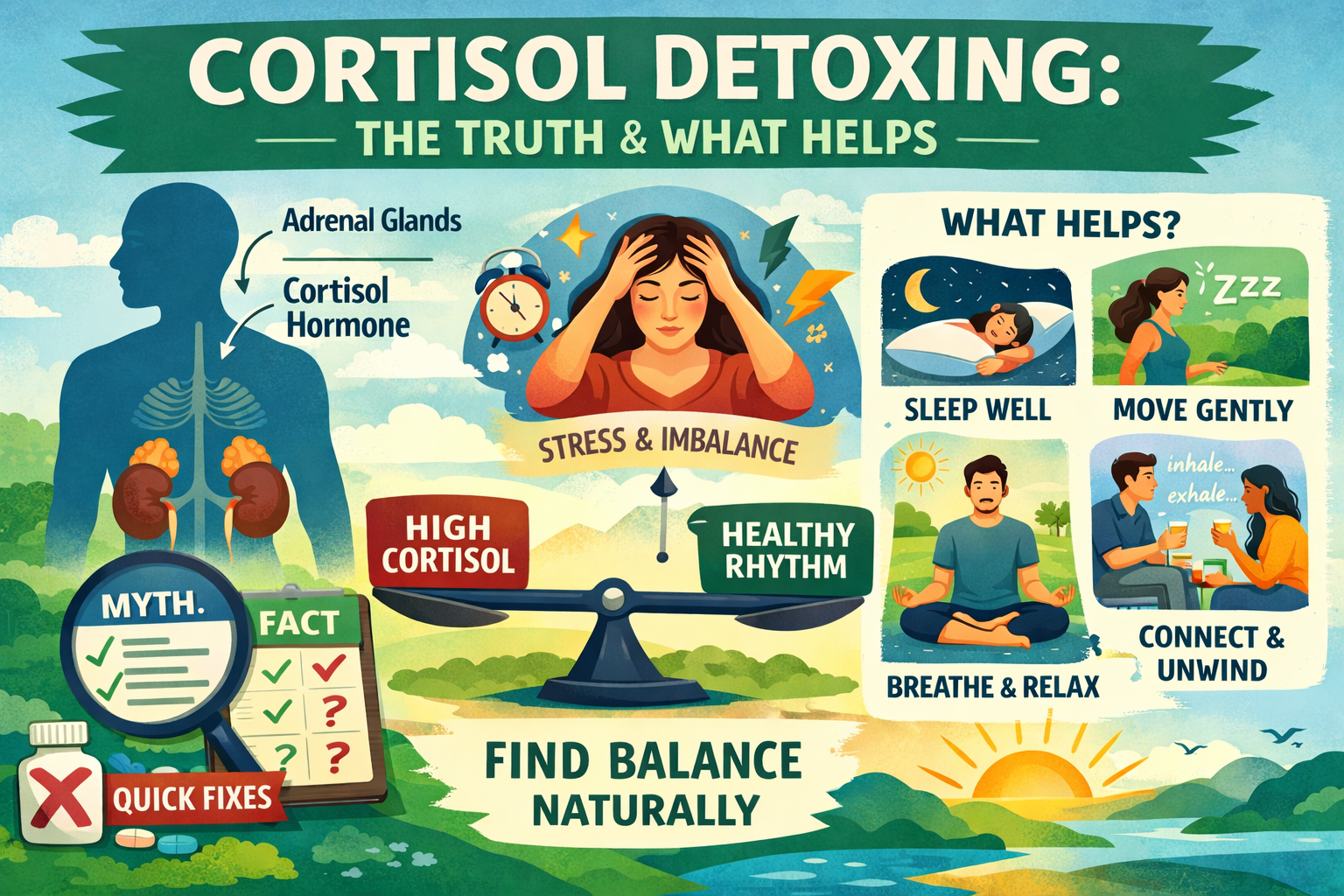
“Cortisol detox” sounds like a new buzz words, for an easy solution, as if we could just wash away stress and feel completely renewed. But the truth is, cortisol is not a toxin. It is a hormone our bodies make every day, for specific purpose, to help us survive and function properly and efficiently. Many doctors now say that most people do not need to worry about “managing cortisol” the way social media suggests. Instead of trying to detox cortisol, what we really need is a healthier cortisol rhythm, so our bodies feel safe enough to relax and leave survival mode behind.
What is cortisol, and why do we need it?
Cortisol is a steroid hormone made by the adrenal glands, which are located above our kidneys. (Cleveland Clinic) It helps control energy, metabolism, blood pressure, inflammation, and how we handle stress.
A simple quote we can hold onto is: “Cortisol is a steroid hormone that your adrenal glands make.”
Cortisol also follows a daily pattern. It goes up in the morning as part of our body’s internal clock, then slowly drops as the day goes on. This morning increase is called the “cortisol awakening response” (PubMed)
So, what do people really mean when they talk about “cortisol detoxing”?
Usually, people mean they feel stuck in stress and want relief from symptoms like tiredness, poor sleep, anxious thoughts, changes in belly weight, cravings, irritability, or brain fog. with lifestyle stress and poor recovery. Sometimes they are linked with mental health, sleep disorders, medication effects, or medical conditions. The important point is that we cannot diagnose cortisol problems from symptoms alone.
When cortisol is truly a medical issue
There are real medical conditions where cortisol is too high or too low, such as Cushing’s syndrome (high cortisol) or adrenal insufficiency (low cortisol). These are uncommon, and diagnosing them is not simple.
Clinicians often say that most people do not need to worry about controlling cortisol. But if symptoms last or are severe, it is best to talk to a qualified doctor or professional instead of trying to self-test or use online supplements.
What science supports instead: regulate, and take care of our health, the best way is to support the things that naturally balance cortisol: sleep, sunlight, movement, breathing, connection, and recovery.
1) Sleep is not a luxury; it is an extreme necessity. It is a part of cortisol management
Research shows that losing sleep can raise cortisol levels. In one controlled study, total sleep deprivation led to a big increase in cortisol.
2) Stress management can shift cortisol in measurable ways
A 2024 meta-analysis found that stress management techniques improved cortisol overall. Meditation and relaxation had real effects on cortisol in blood, saliva, or hair. (ScienceDirect)
Another meta-analysis of meditation found that it reduced cortisol levels across several studies.
There’s also real-world evidence. A 2023 study found that mindfulness practice reduced hair cortisol levels, anxiety, and perceived stress.
3) Movement helps, but intensity matters
Physical activity is linked to healthier daily cortisol patterns, including a steeper rise and fall throughout the day. (ScienceDirect). However, very intense exercise can raise cortisol for a while. If you’re already feeling burnt out, gentle and consistent movement is better than tough workouts.
A simple, safe “cortisol reset” we can actually follow:
Here is a simple routine to support a healthier cortisol rhythm, without any hype.
Morning: set the nervous system tone
1. Get daylight in the first hour for 5 to 15 minutes if possible.
2. Move gently: a morning walk, light stretching, or yoga exercise.
3. Protein and water before heavy caffeine, if we can release stress before it piles up
4. Two minutes of slow breathing: inhale softly through the nose, exhale a little longer through the mouth. Repeat. There are articles on different types of deep breathing exercises for relaxation on the blog of www.breathworkcentre.com.
5. Micro breaks: stand up, relax shoulders, unclench jaw, look far into the distance.
Evening: help cortisol come down naturally
6. Cut screens earlier and dim lights closer to bedtime.
7. Keep sleep timing steady as often as possible, even on weekends.
This routine is not dramatic, but it is powerful. It reminds the body, repeatedly, “we are safe enough to recover.” The name of “detox”
- Avoid extreme cleanses, unregulated supplements, or random cortisol tests from the internet. The results can be misleading, and these products may be potentially risky.
- Do not treat cortisol like the enemy. It is part of our survival system. “Cortisol detoxing” sounds catchy, but the real solution is simpler: we do not detox cortisol, we help our bodies feel safe and find a healthy rhythm. When we sleep well, breathe deeply, move gently, and avoid constant stress, cortisol usually returns to its natural pattern. Over time, we start to feel like ourselves again. We come back to ourselves.
If you like, let me know your audience - students, working professionals, parents, or wellness seekers, and we can adjust the examples and the “7-day reset” routine to fit their real lives.