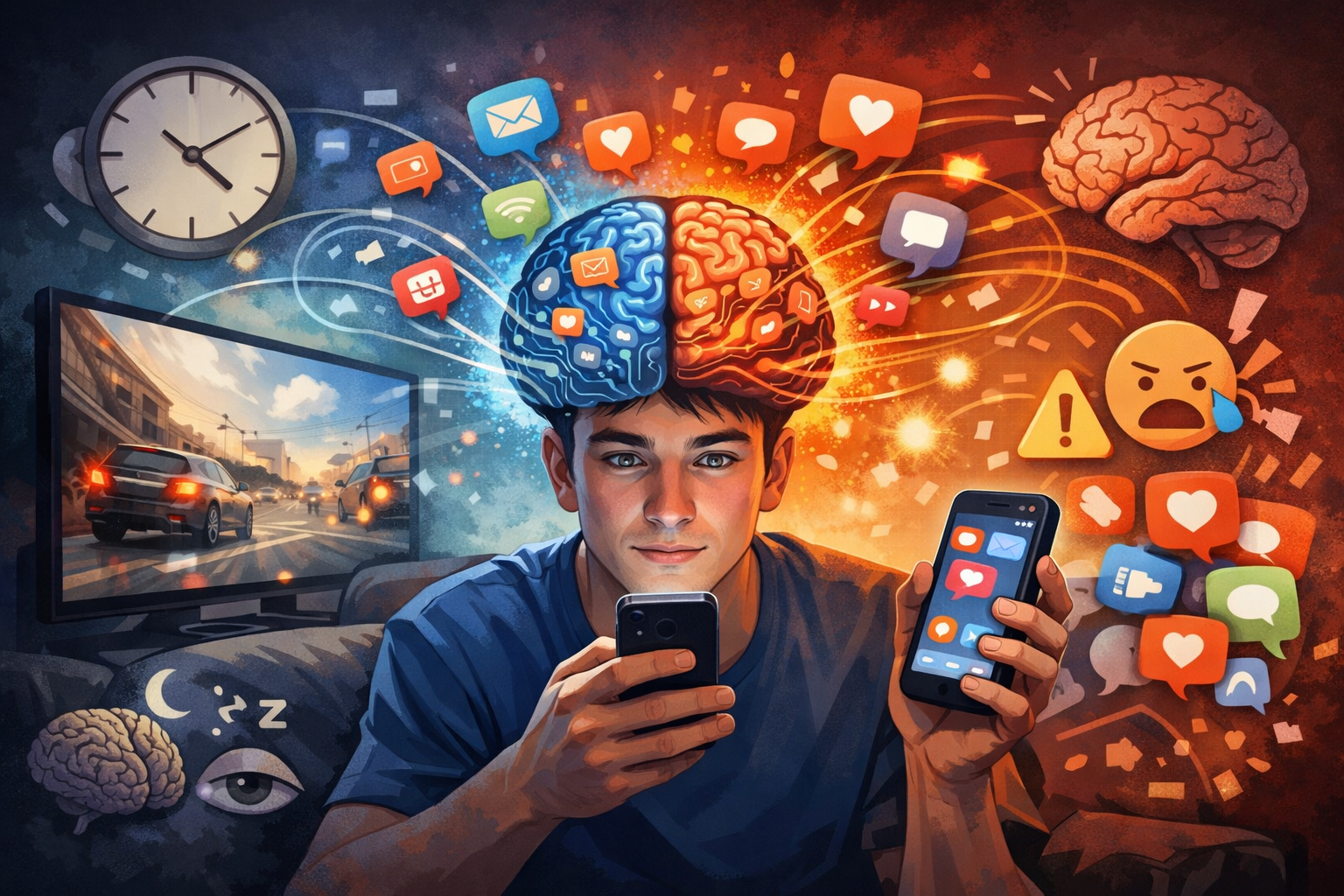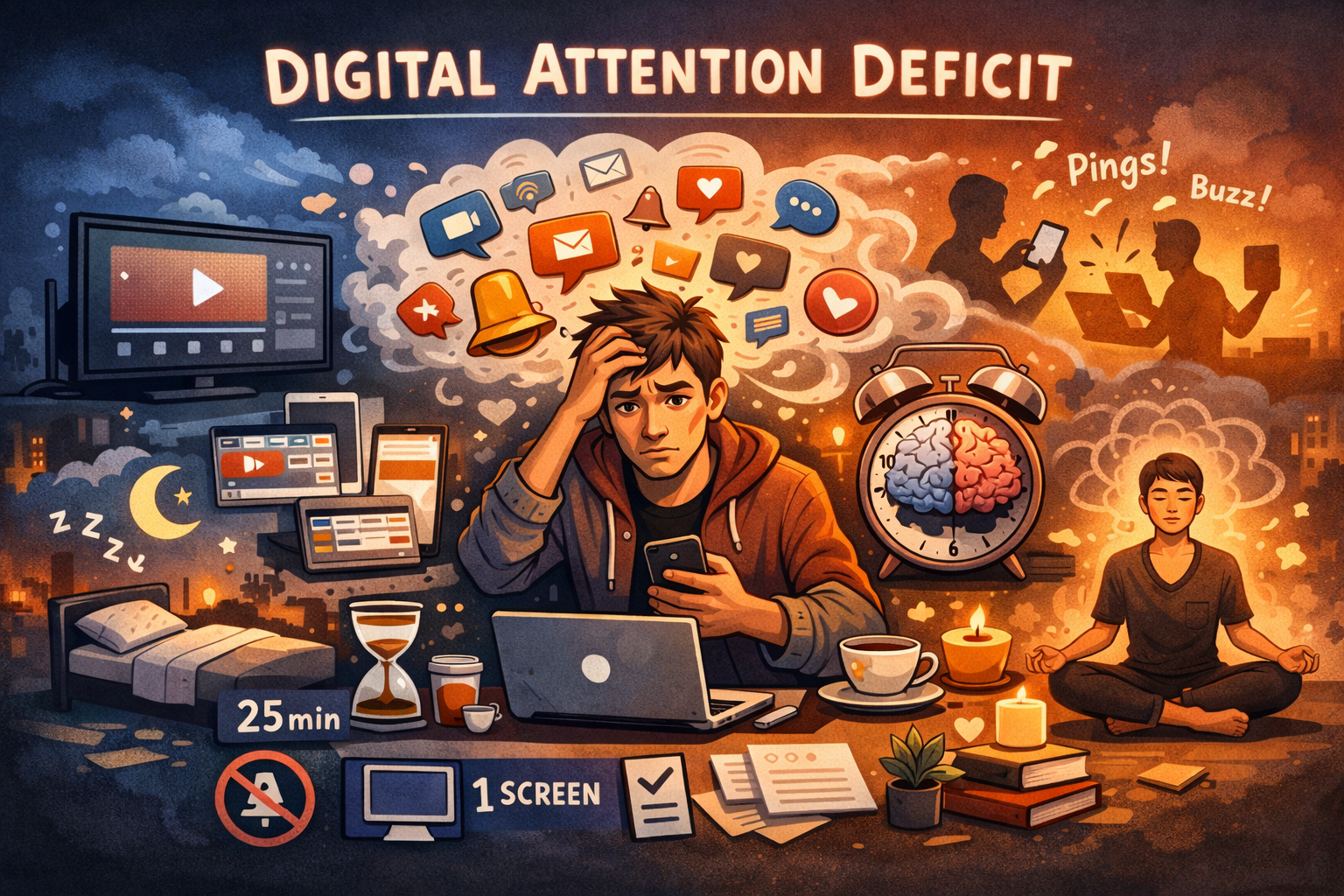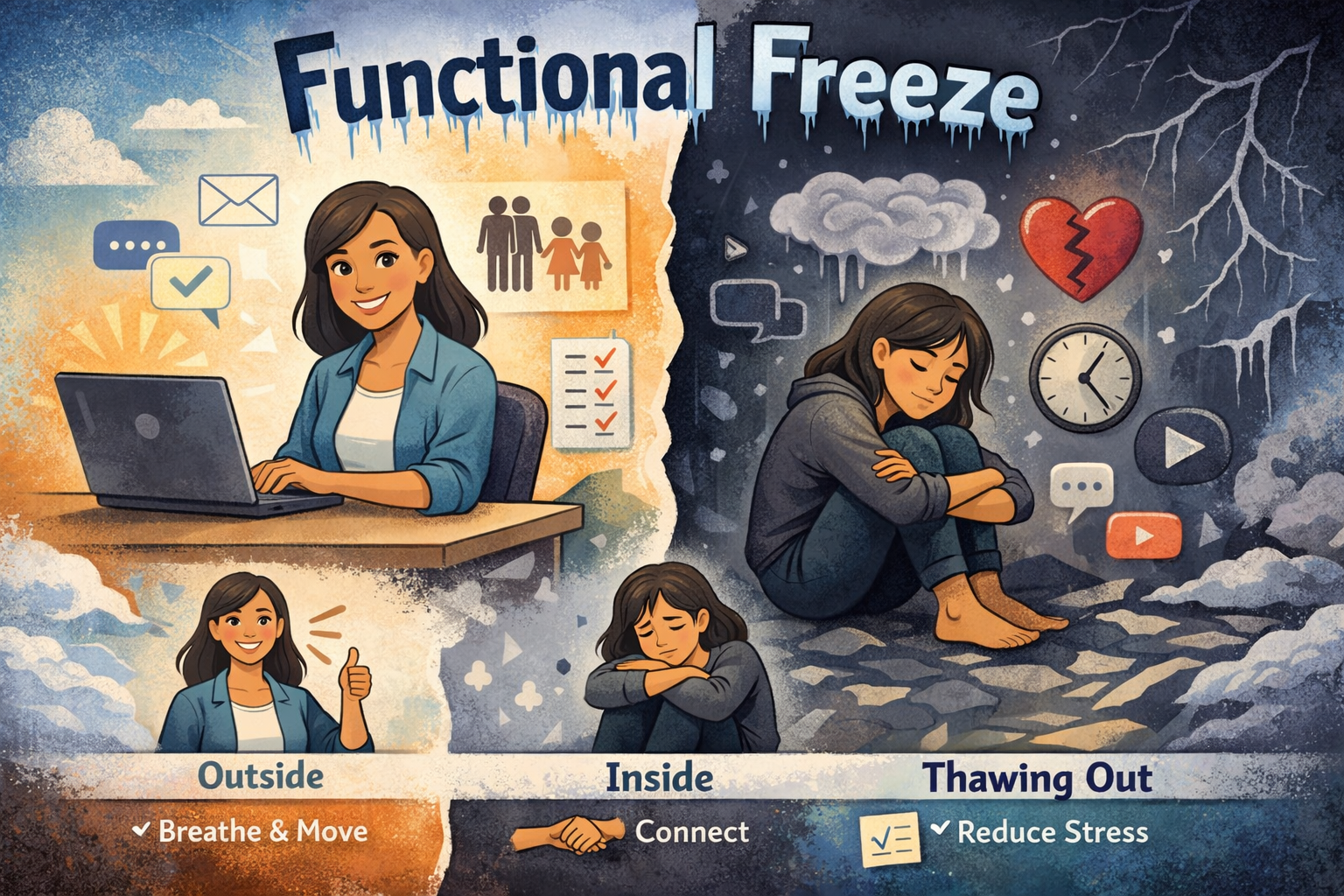
It is not unusual to find ourselves while sitting on a comfortable sofa yet feeling tired, as if ran a marathon. Without physical tiredness like after a long walk or some laborious work, the demands of screens can be exhausting. A day filled with messages, meetings, scrolling, and checking digital screens can leave us depleted in a distinctly modern way. Digital fatigue refers to a persistent tiredness that is not alleviated by simple rest, affecting both our bodies and our attention.
The digital burden can be heavy. Global data indicate that the average internet user spends around 6 hours and 40 minutes online daily (DataReportal – Global Digital Insights). With so much of our day spent on screens, our brains lack the quietness needed to recover.
Defining digital fatigue
Digital fatigue encompasses mental, emotional, and physical strain that accumulates from prolonged screen exposure and continuous information intake. Common symptoms include cognitive fog, irritability, reduced motivation, ocular discomfort, and a sensation of mental saturation without fulfilment.
This phenomenon closely aligns with the World Health Organisation’s definition of burnout in the workplace: “Burn-out is a syndrome conceptualised as resulting from chronic workplace stress that has not been successfully managed.” (World Health Organisation) Digital fatigue may contribute to this stress cycle, particularly when professional and personal digital activities merge into a continuous stream.
1) The cognitive cost of frequent attention switching
Our attention keeps paying a switching cost. Even when we think we are multitasking, we are usually switching between different tasks. Each switchover expects the brain to reorient, reload context, and restart focus. Research from UC Irvine notes that it can take up to 25 minutes to return our complete attention after an interruption. When notifications and tab hopping happen all day, we end up staying in “restart mode.”
2) The impact of smartphone presence on cognitive resources
A powerful study called Brain Drain found that the mere presence of our smartphones can reduce available cognitive capacity, because attention resources get used up in resisting them.That explains why we can feel scattered even when the phone is face down and silent.
3) Physical manifestations of digital fatigue
Digital fatigue is not only in the mind. A large systematic review found a pooled prevalence of computer vision syndrome (digital eye strain) of around 69% across studies. Dryness, blurred vision, headaches, stiff neck, and general fatigue are part of this.
4) Unique fatigue associated with work from home or video conferencing is a kind of tiredness.
Stanford researchers have explained why video meetings can exhaust us and offered practical fixes, such as reducing self-view and taking breaks. (Stanford News) Transitioning from these findings, it's clear that even when our minds drift, we experience a small personal moment that many of us will recognise.
After a long stretch of video calls and scrolling, we felt oddly restless. Though off the clock, our eyes may feel gritty and shoulders become tense. To reset, we place the phone out of reach, take some water, breathed slowly for two minutes, and took a quick walk by the window. The improvement was subtle, but noticeable. This taught us that digital fatigue needs recovery, not more stimulation.
Implementing practical strategies for cognitive recovery
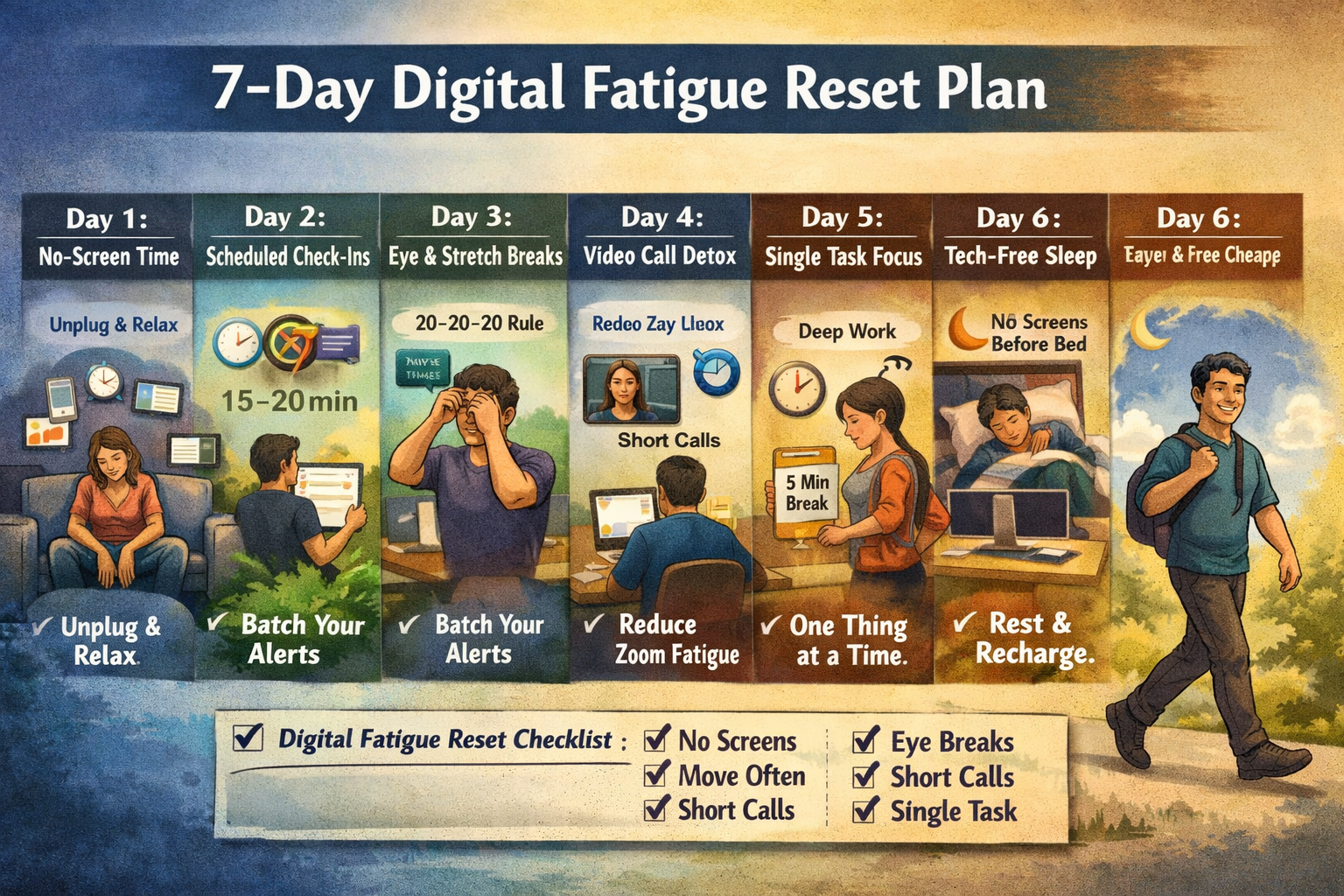
Step 1: Create a daily no-screen time-slot
Start with 15 to 20 minutes. No phone, laptop, or TV. This is not a productivity hack; it is a nervous system break. The goal is to let our mind relax.
Step 2: Consolidate notifications into scheduled review periods
Designate specific times to check messages rather than continuously responding to notifications. This minimises interruptions and preserves attention.
Step 3: Integrate ocular and physical relief strategies
Use eye-relief techniques and physical movement to reduce digital fatigue.
- Regularly look away from screens and blink fully.
- Stand and move for 2 minutes every hour. Research shows digital eye dryness or strain is common and linked with prolonged device use, so these small breaks are not optional.
Step 4: Reduce the cognitive load of video conferencing
Based on Stanford’s guidance, we can reduce fatigue by doing simple things like hiding self-view, using speaker view, and scheduling short breaks between calls. (Stanford News) We can also choose audio calls when video is not essential.
Step 5: Gradually restore sustained attention to one task, then take a 5-minute break. Even one cycle a day trains the brain back toward depth.
Step 6: Prioritise sleep as an essential component of well-being
Digital fatigue and poor sleep feed each other. To break the cycle, try this simple rule: avoid heavy scrolling for 30 to 60 minutes before bed. This not only helps our brain unwind, but also encourages adopting a more balanced approach to technology—a healthier way to live with tech.
Digital fatigue is not a personal weakness. It is a predictable outcome of a world designed to keep our attention switched on and off.
The takeaway:
We need to give our brain fewer interruptions, our eyes more breaks, and our nervous system more quiet helps us feel like ourselves again. These strategies can be organised into a straightforward '7-day digital fatigue reset plan,' with a checklist suitable for both workdays and weekends.