We all experience it from time to time: an argument, a careless comment, or a frustrating delay, and suddenly anger takes over. Later, we wonder why we overreacted. The answer is found deep in our brain, in a small almond-shaped structure called the amygdala. Learning how this part of the brain works can help us regain control over our emotions and choose how we respond.
The Amygdala: Our Emotional Alarm System
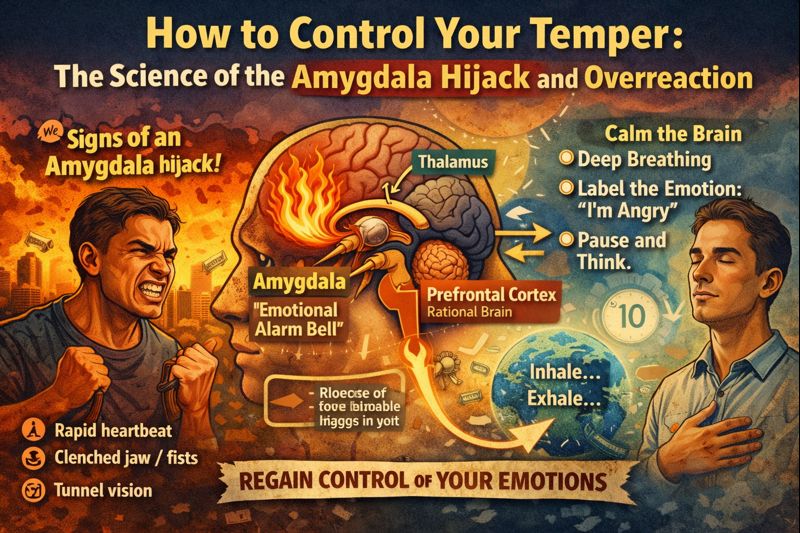
The amygdala sits deep within the limbic system and acts as our brain's emotional alarm bell. It detects threats, whether real or imagined, and instantly prepares us for action. This reaction, called the "fight, flight, or freeze" response, helped our ancestors survive.
But today, this system can misfire. The amygdala may treat a harsh email or criticism like a real threat. When this happens, our logical brain, the prefrontal cortex, temporarily shuts down. Daniel Goleman, who introduced the term "amygdala hijack" in his book Emotional Intelligence (1995), describes this as a moment when emotions take over rational thinking.
The Science Behind Overreaction
Neuroscience research helps explain this. A study by Dr. Joseph LeDoux at New York University found that emotional signals from the thalamus reach the amygdala before they reach the prefrontal cortex of our brain, the rational part. This means we feel before we think. That is why our body reacts in milliseconds, our heart races, muscles tense, and breathing speeds up, before we even realize what's happening.
When the amygdala takes over, the prefrontal cortex, which handles reasoning, impulse control, and decision-making, shuts down. That is why we sometimes say or do things we later regret: our brain is then focused on survival, not clarity.
Recognizing the Signs of an Amygdala Hijack
The first step to gaining control is awareness. We can learn to notice the physical and emotional signs that a hijack is about to happen, such as a rapid heartbeat or a tight chest.
- Clenched jaw or fists
- Sudden heat in the body
- Tunnel vision or racing thoughts
When we notice these signs, it is a clear signal that our amygdala is taking over. That is our cue to pause.
Calming the Brain: What Neuroscience Says Works
1. Deep Breathing and the Parasympathetic Response
Breathing deeply through your nose and exhaling slowly activates the parasympathetic nervous system, which helps calm the stress response. Research from Harvard Medical School shows that slow, steady breathing lowers cortisol levels and heart rate, helping the prefrontal cortex work again.
Try this: Inhale for 4 seconds, hold for 4, exhale for 6. Repeat for one minute.
2. Label the Emotion
A UCLA study led by Dr. Matthew Lieberman found that simply naming your emotion, like saying "I'm angry" or "I'm hurt," reduces activity in the amygdala and increases activity in the right prefrontal cortex. This is called "affect labeling." When we label our feelings, we use our rational brain and start to feel more in control.
3. Take a Pause Before Reacting
Taking a brief pause, even for a few seconds, gives your rational brain time to catch up. Counting slowly to ten, taking a short walk, or sipping water can help interrupt the emotional rush. This small gap between what happens and how we respond is what Viktor Frankl called "the space where our freedom lies."
4. Practice Mindfulness Regularly
Mindfulness meditation can shrink the amygdala and strengthen the prefrontal cortex. Research by Harvard neuroscientist Dr. Sara Lazar found that people who meditate regularly have thicker brain regions linked to emotional control. Simply put, mindfulness helps us become less reactive over time.
5. Reappraise the Situation
Cognitive reappraisal means looking at a situation from a different perspective, which helps calm the amygdala. For example, instead of thinking "They disrespected me," we might think, "Maybe they're stressed too." This shift does not excuse bad behavior, but it helps us avoid getting caught in an emotional spiral.
Building Emotional Intelligence Every Day
Controlling our temper is not about suppressing emotions. It is about understanding what is happening in our brains and choosing a more balanced response. The more we practice awareness, the stronger our prefrontal cortex becomes in moments of stress.
We can start small. By noticing our breath, recognizing triggers, and reflecting afterward. Over time, our brain rewires itself through neuroplasticity, making calmness our new default. Studies by Dr. Richard Davidson at the University of Wisconsin show that consistent mindfulness practice enhances brain circuits linked to compassion and resilience.
In the End, It is About Self-Mastery
Learning to manage anger is not just emotional work; it is brainwork. Every time we recognize a hijack and choose calm over chaos, we strengthen the brain's self-control pathways. The goal isn't to avoid anger, but to respond wisely.
When we understand the science behind our emotions, we stop being victims of biology and start mastering our minds.